Commercial Landscaping Requirements for New Developments
Commercial landscaping is often one of the final stages of a development project, but it should never be one of the last things planned. Whether you're building an office complex in Amherst, a retail center in Cheektowaga, an apartment community in Lancaster, or an industrial facility in Tonawanda, landscaping plays a major role in how the finished property functions, performs, and is perceived.
Many developers focus heavily on site work, utilities, paving, and buildings, only to realize later that landscaping requirements impact drainage, erosion control, occupancy timelines, and overall project budgets.
The reality is that commercial landscaping is much more than installing a few trees and spreading grass seed. It involves planning for long-term maintenance, site stabilization, aesthetics, drainage, and compliance with local development requirements.
In this guide, we'll cover the commercial landscaping requirements commonly associated with new developments in Western New York and explain how proper planning can help avoid delays and unnecessary costs.
Commercial Landscaping Starts During Site Planning
One of the biggest mistakes developers make is treating landscaping as a finishing touch rather than part of the site design process.
Many landscape-related decisions affect other aspects of development, including:
-
- Stormwater management
- Site grading
- Erosion control
- Traffic flow and visibility
Planning landscaping early allows these systems to work together rather than competing for space later in the project.
This is why many successful projects begin with a comprehensive landscape design plan before construction is complete.
Proper Grading and Drainage Are Critical
Before any trees, shrubs, or lawn areas are installed, the site must handle water properly.
Commercial developments often contain large amounts of hard surfaces including:
-
- Parking lots
- Drive lanes
- Sidewalks
- Building roofs
These surfaces generate significant runoff during rain events.
As a result, many projects require carefully planned drainage solutions to prevent water from damaging landscaped areas or creating maintenance problems.
If drainage isn't addressed early, landscape installations often struggle long after construction is complete.
Erosion Control Is Often Required Before Final Landscaping
Most new developments involve significant soil disturbance.
Without proper stabilization, rainfall can wash away valuable topsoil and damage completed site work.
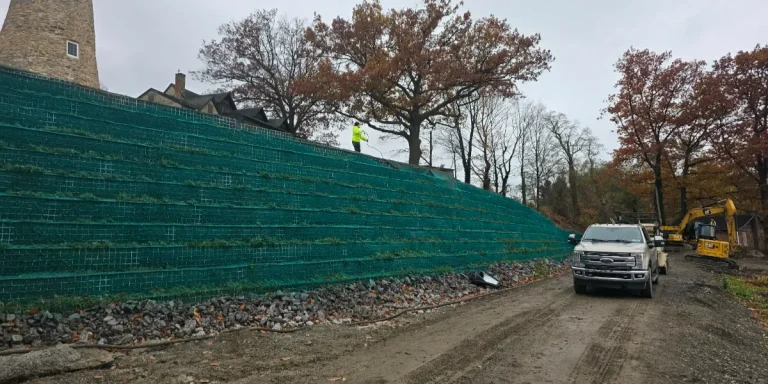
Erosion control measures are commonly used during and after construction to:
-
- Protect exposed soil
- Reduce sediment movement
- Stabilize slopes
- Support vegetation establishment
Many projects utilize erosion control solutions alongside final landscaping to protect the site until permanent vegetation becomes established.
Waiting until construction is finished often allows unnecessary soil loss to occur.
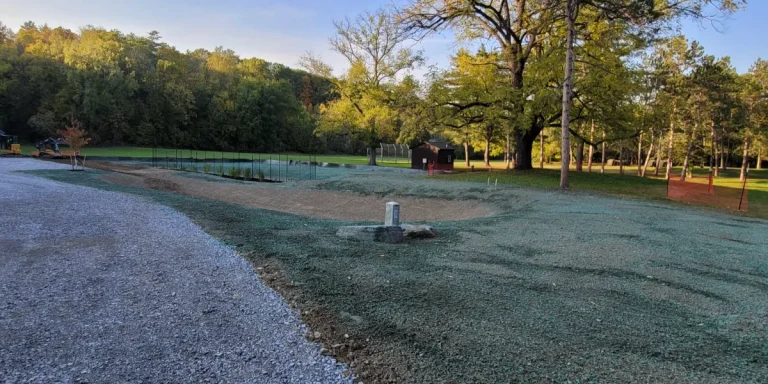
Hydroseeding Has Become Popular on Commercial Projects
Large commercial properties frequently require substantial lawn areas.
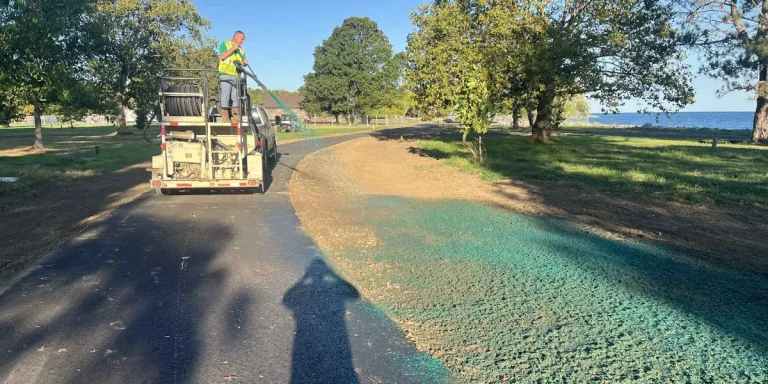
For many developments, hydroseeding offers an efficient and cost-effective solution.
Benefits of hydroseeding include:
-
- Fast coverage of large areas
- Lower installation costs compared to sod
- Improved erosion protection during establishment
- Uniform lawn development across the site
Hydroseeding is commonly used on office parks, industrial sites, apartment complexes, and retail developments throughout Western New York.
It often serves as the final stabilization step after grading is complete.
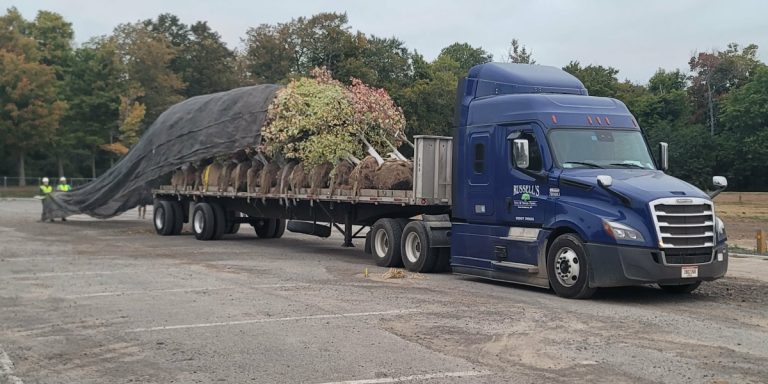
Tree Requirements Often Influence Site Layout
Trees do much more than improve appearance.
Many municipalities encourage or require tree installation because of the benefits they provide, including:
-
- Shade for parking areas
- Visual screening
- Improved property aesthetics
- Environmental benefits
Proper tree planting requires planning around utilities, buildings, sidewalks, and future growth.
Selecting the right species is equally important, especially for commercial properties where low-maintenance performance is often a priority.
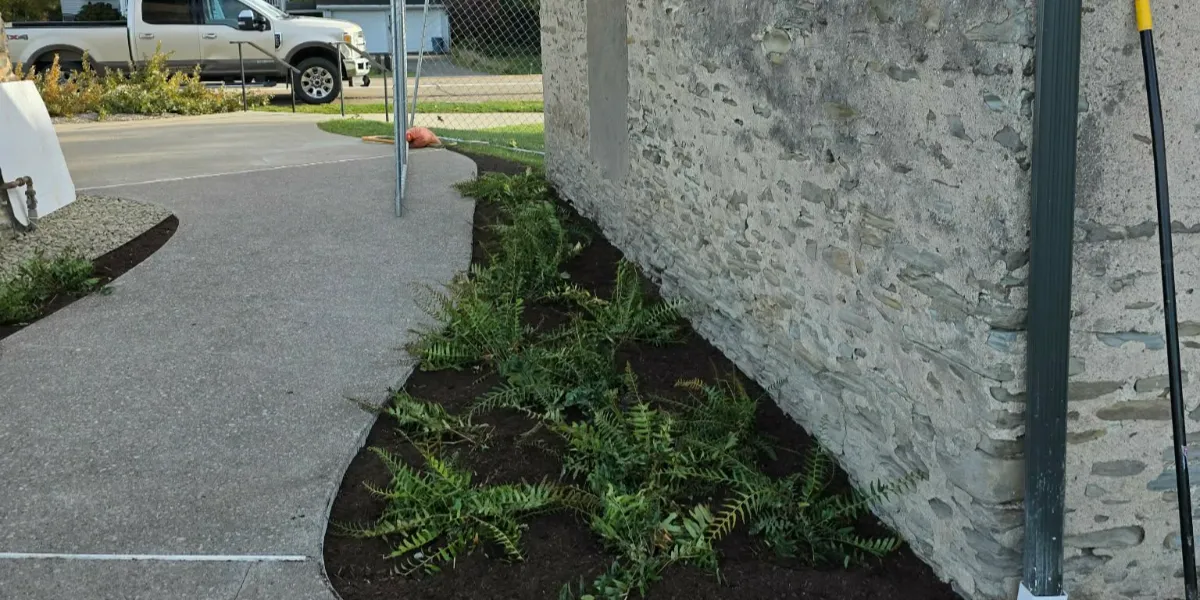
Landscape Beds Help Define the Property
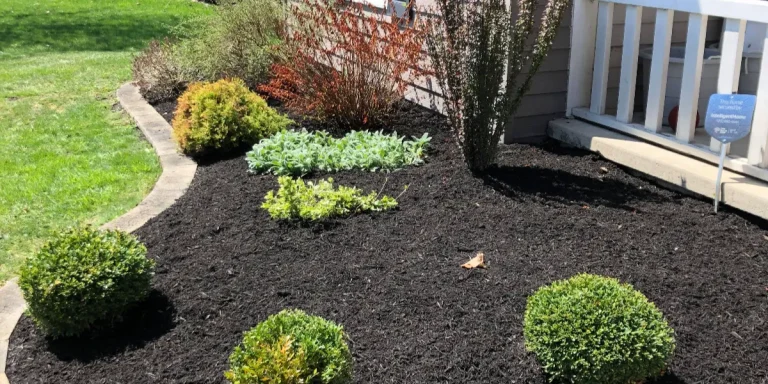
Commercial developments often use landscape beds to create a more professional appearance while organizing different areas of the site.
Strategically placed landscape beds can:
-
- Highlight entrances
- Frame signage areas
- Provide visual separation
- Improve overall curb appeal
These beds are often combined with shrubs, ornamental grasses, and seasonal plantings to create year-round visual interest.
When designed properly, they also reduce long-term maintenance requirements.
Commercial Landscaping Should Be Built for Maintenance
One of the biggest differences between residential and commercial landscaping is maintenance.
A design that looks attractive initially may become expensive if long-term maintenance wasn't considered.
Successful commercial landscapes typically focus on:
-
- Durable plant selections
- Efficient irrigation strategies
- Low-maintenance landscape beds
- Long-term growth management
The goal is to create a landscape that continues looking professional without excessive upkeep.
This becomes particularly important for apartment communities, office complexes, and industrial facilities.
Hardscape Features Are Often Part of Commercial Landscaping
Commercial landscaping extends beyond vegetation.
Many developments include hardscape elements such as:
These features often improve functionality while helping manage grade changes and traffic flow throughout the property.
Planning them alongside landscaping creates a more cohesive site design.
The Most Common Landscaping Mistakes on New Developments
Across Western New York, we regularly see commercial projects run into avoidable landscaping issues.
Common problems include:
-
- Waiting too long to plan landscaping
- Ignoring drainage requirements
- Selecting plants based solely on appearance
- Underestimating long-term maintenance needs
Most of these problems can be avoided by involving landscaping professionals early in the development process.
Proactive planning almost always costs less than making corrections later.
Using Technology to Plan Commercial Landscaping
Today's developers have more planning tools available than ever before.
Before installation begins, property owners can use the landscape visualizer to explore concepts and better understand how landscaping elements will fit into the completed development.
This helps:
-
- Improve planning accuracy
- Visualize finished spaces
- Identify potential issues early
- Coordinate landscaping with site construction
The earlier these decisions are made, the smoother the installation process typically becomes.
Why choose Buffalo Landscaping
Commercial landscaping is about much more than appearance. It plays a major role in site performance, property value, drainage, and long-term maintenance costs.
At Buffalo Landscaping, we help developers, builders, and property owners throughout Western New York create commercial landscapes that are built to perform long after construction ends.
-
- Commercial landscaping experience across a wide range of property types
- Complete grading, drainage, hydroseeding, planting, and hardscape capabilities
- Long-term focus on functionality and maintenance efficiency
- New York State Certified Women's Business Enterprise (WBE)
- Planning support through our Landscape Pricing Guide and visualizer
Our goal is simple, help create commercial properties that look professional, function properly, and continue performing for years to come.
Serving Buffalo and surrounding communities
Buffalo Landscaping proudly provides commercial landscaping services throughout:
-
- Buffalo
- Amherst
- Clarence
- Orchard Park
- Williamsville
- Cheektowaga
- Lancaster
- Tonawanda
- West Seneca
We understand the challenges associated with developing commercial properties throughout Western New York.
Plan Your Commercial Landscaping Before Construction Ends
If you're developing a commercial property, landscaping should be part of the project plan long before the final inspection.
At Buffalo Landscaping, we help developers and property owners create landscaping plans that support drainage, erosion control, curb appeal, and long-term maintenance goals.
Whether you're building a retail center, office complex, industrial facility, or multi-family development, the best results come from planning landscaping early.
Request an estimate today and discuss your commercial landscaping requirements.