Erosion Control Solutions for Sloped Properties WNY
Sloped properties can create some of the most challenging landscaping conditions in Western New York. Whether it's a backyard dropping toward a wooded area in Orchard Park, a side yard in East Aurora, or a newly constructed home built on a hillside lot in Clarence, erosion can quickly turn a beautiful landscape into an expensive problem.
Many homeowners first notice erosion as small channels forming after heavy rain. Over time, those minor issues often become washed-out mulch beds, exposed roots, damaged lawns, unstable slopes, and drainage problems that affect the entire property.
The good news is that erosion can usually be controlled when the underlying causes are addressed properly. The key is choosing solutions that match the severity of the slope, soil conditions, drainage patterns, and long-term goals for the property.
In this guide, we'll cover the most effective erosion control solutions for sloped properties in Western New York, common mistakes homeowners make, and how to protect your landscape investment before small problems become major repairs.
Why Sloped Properties Are More Vulnerable to Erosion
Gravity is constantly working against sloped landscapes.
When rainfall or snowmelt moves downhill, it carries soil particles with it. Over time, that movement slowly strips away the top layer of soil that supports healthy grass, trees, shrubs, and landscape beds.
Several factors increase erosion risk:
-
- Steep grades that accelerate water flow
- Heavy clay soils common throughout Western New York
- Poor drainage patterns that concentrate runoff
- Large areas of exposed soil without vegetation
Once erosion begins, it often worsens each season as water follows the same path and removes additional material.
That's why early intervention is usually less expensive than waiting until significant damage occurs.
Drainage Problems Are Often the Real Cause
One of the biggest misconceptions about erosion is that it's strictly a slope problem.
In reality, many erosion issues are actually drainage problems.
When roof runoff, downspouts, sump discharges, or surface water are concentrated into a small area, even moderate slopes can begin washing out.
Before recommending erosion control measures, we typically evaluate:
-
- How water enters the property
- Where water collects during storms
- Existing grading patterns
- Areas of concentrated runoff
In many situations, installing proper drainage solutions is the first step toward controlling erosion permanently.
Treating the symptom without addressing water movement usually leads to recurring problems.
Vegetation Is One of the Most Effective Erosion Control Tools
One of the best long-term erosion control solutions is establishing healthy vegetation.
Roots help bind soil together and slow the movement of water across the surface.
Depending on the property, this may include:
-
- Hydroseeding for large slopes
- New lawn installation
- Tree planting to stabilize larger hillside areas
- Shrubs and deep-rooted plantings
Properly selected plant material not only reduces erosion but also improves the appearance of difficult slopes.
The key is choosing species that thrive in Western New York conditions rather than simply covering the area with grass seed.
Hydroseeding Is Often Ideal for Large Slopes
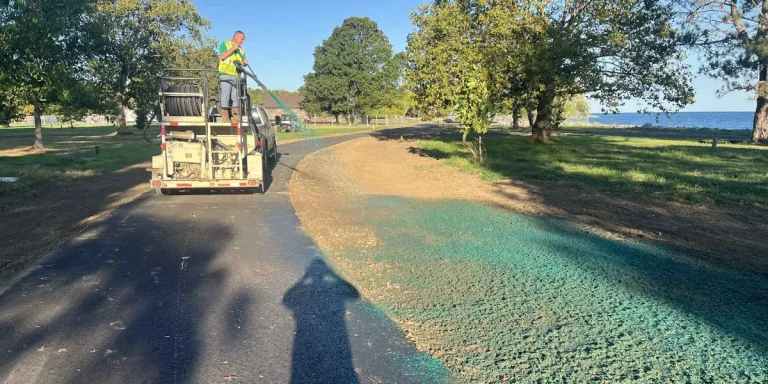
For newly graded properties and larger hillsides, hydroseeding has become one of the most effective erosion control methods available.
The hydroseeding slurry contains mulch fibers, fertilizer, water, and seed that help protect exposed soil while vegetation establishes.
Benefits include:
-
- Fast coverage of large areas
- Improved moisture retention
- Reduced soil displacement during rain events
- Cost-effective stabilization of difficult terrain
This is one reason hydroseeding is frequently used on new construction projects, commercial developments, and large residential properties throughout Western New York.
Retaining Walls Can Eliminate Severe Erosion Problems
When slopes become too steep, vegetation alone may not be enough.
In these situations, structural solutions often provide the best long-term results.
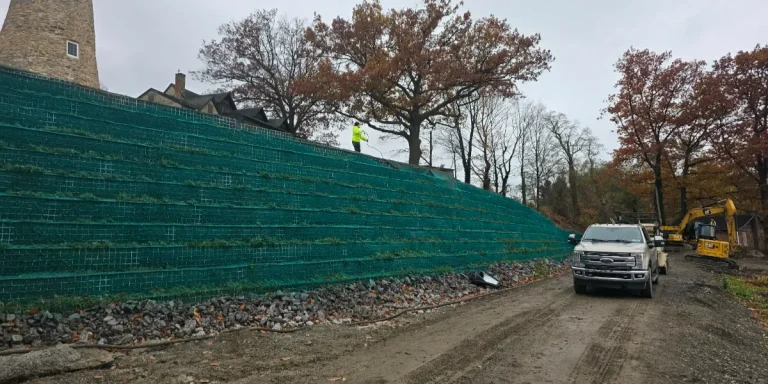
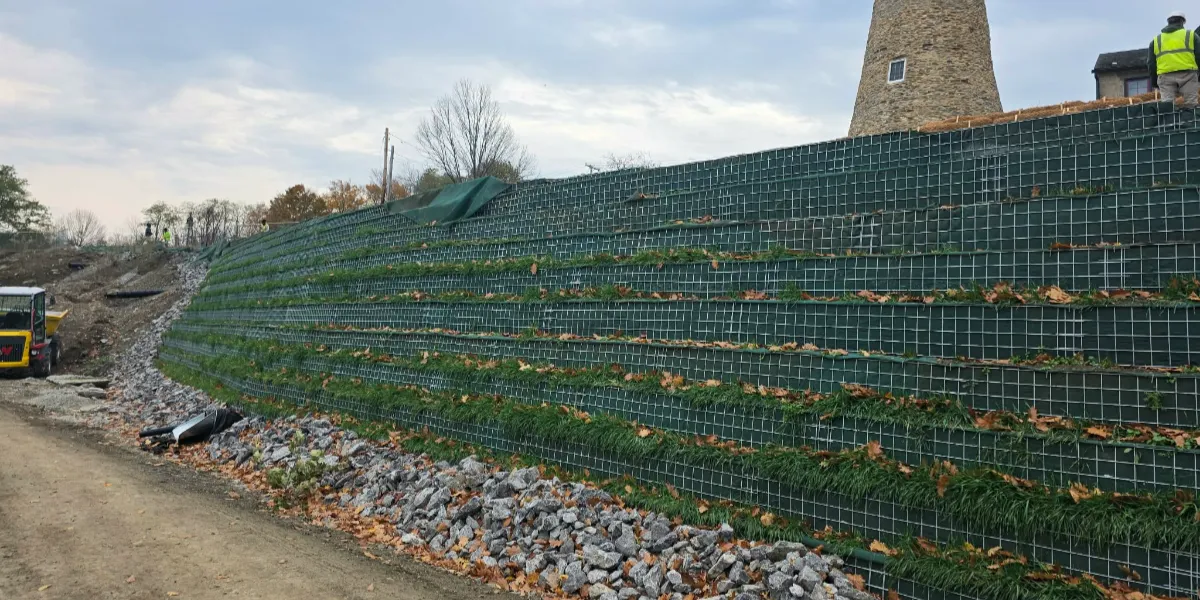
A properly engineered retaining wall can:
-
- Create usable flat space
- Reduce the effective slope
- Prevent soil movement
- Control water runoff
Retaining walls are particularly valuable on properties where erosion threatens patios, foundations, driveways, or outdoor living spaces.
Rather than continually repairing washouts, homeowners can permanently stabilize the area.
Ground Cover and Landscape Beds Can Protect Problem Areas
Not every slope needs a retaining wall.
Moderate grades often benefit from strategically designed landscape beds that break up water flow and protect exposed soil.
This may include:
-
- Landscape bed installations
- Decorative stone areas
- Mulched planting zones
- Low-maintenance ground cover plantings
When designed properly, these features reduce erosion while creating a more attractive landscape.
They can also reduce mowing requirements on difficult slopes.
The Most Common Erosion Control Mistakes We See
Many erosion problems become worse because homeowners focus on quick fixes instead of addressing the root cause.
Some of the most common mistakes include:
-
- Adding mulch to active washout areas
- Installing grass seed without correcting drainage
- Ignoring concentrated runoff from downspouts
- Trying to stabilize steep slopes with surface materials alone
These solutions may improve appearance temporarily, but they rarely solve the underlying issue.
Successful erosion control requires understanding how water moves across the property.
How Erosion Control Fits Into a Complete Landscape Plan
The most successful erosion control projects are usually part of a larger property improvement strategy.
Many homeowners combine erosion control with:
-
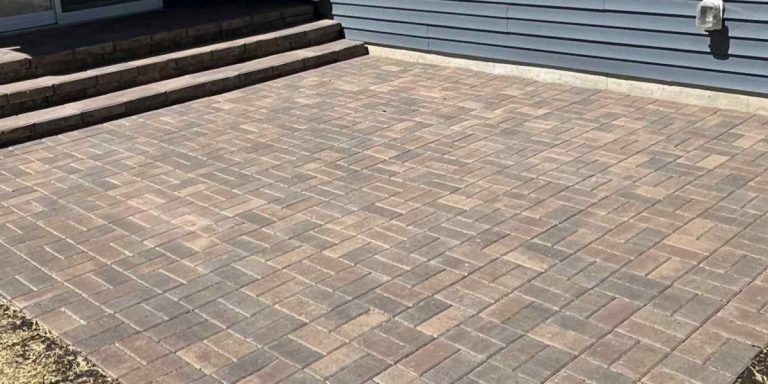
- Patio construction
- Walkway installation
- Hardscape improvements
- Outdoor living space upgrades
Using the landscape visualizer can help property owners see how drainage improvements, retaining walls, plantings, and outdoor living features work together before construction begins.
This often produces a better long-term result than treating erosion as a standalone issue.
Planning the Investment Before Problems Get Worse
Erosion rarely fixes itself.
In most cases, the longer it continues, the more expensive the repairs become.
Before beginning a project, it's important to evaluate:
-
- The source of the water
- The severity of soil loss
- Future plans for the property
- Whether structural solutions are required
Our Landscape Pricing Guide helps homeowners understand investment ranges for various erosion control and landscape improvement solutions.
Planning early often prevents much larger repair costs later.
Why choose Buffalo Landscaping
Erosion control requires more than simply covering exposed soil. It requires understanding how water moves through a property and implementing solutions that address the problem long term.
At Buffalo Landscaping, we help homeowners throughout Western New York stabilize slopes, improve drainage, and protect their landscape investments.
-
- Experience with drainage, grading, and erosion control projects
- Full-service landscape and hardscape capabilities
- Retaining wall, hydroseeding, and planting expertise
- New York State Certified Women's Business Enterprise (WBE)
- Planning support through our Landscape Pricing Guide and visualizer
Our goal is simple, stop erosion at its source and create a landscape that remains stable, attractive, and functional for years to come.
Serving Buffalo and surrounding communities
Buffalo Landscaping proudly provides erosion control and landscaping services throughout:
-
- Buffalo
- Amherst
- Clarence
- Orchard Park
- Williamsville
- Cheektowaga
- Lancaster
- Tonawanda
- West Seneca
We understand the drainage, soil, and slope challenges that affect properties throughout Western New York.
Protect Your Property Before Erosion Gets Worse
If you're seeing washouts, exposed roots, slope instability, or recurring drainage problems, now is the time to address them.
At Buffalo Landscaping, we evaluate your property, identify the source of the problem, and recommend solutions that protect your landscape long term.
Whether you need hydroseeding, retaining walls, drainage improvements, or a complete slope stabilization plan, the first step is understanding what's causing the erosion.
Request an estimate today and get a professional erosion control plan for your property.