Hydroseeding for New Construction in Cheektowaga: What Builders Need to Know
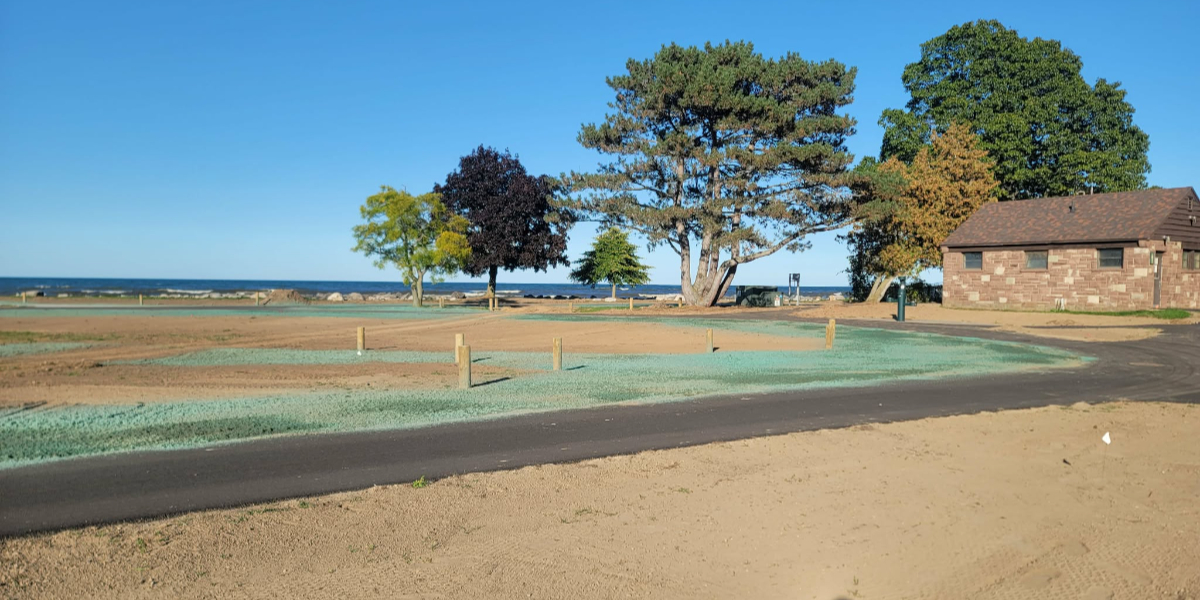
New construction projects in Cheektowaga often reach the finish line with bare soil, rough grading, and a tight timeline to get the property stabilized and presentable. Builders across areas like Maryvale, Sloan, and Cleveland Hill run into the same issue, the structure is complete, but the exterior still looks unfinished and vulnerable to erosion.
Hydroseeding is one of the most efficient ways to establish a new lawn on recently built properties, but getting it right involves more than just spraying seed. Soil prep, grading, timing, and follow-up all play a role in whether the lawn actually comes in evenly.
If you want a finished result that holds up long term, it comes down to proper site preparation, choosing the right method, and coordinating hydroseeding with the rest of the landscaping plan.
In this guide, we’ll break down how hydroseeding fits into new construction projects, common issues we see around Cheektowaga builds, and how to approach it the right way.
What Makes a New Construction Lawn Come In Properly
The difference between a lawn that fills in evenly and one that ends up patchy usually comes down to what happens before the seed is applied.
A successful hydroseeded lawn has a few key factors working together:
-
- Proper grading that directs water away from the structure
- Correct soil preparation to support seed germination
- Even application of seed, mulch, and nutrients
- Consistent watering during the early growth stage
Without these, even a freshly hydroseeded yard can struggle to establish. With them, properties across Cheektowaga and Lancaster can go from bare soil to a full lawn within a few weeks under the right conditions.
Most of the time, the issue isn’t the hydroseeding itself, it’s what was skipped or rushed leading up to it.
Grading and Soil Prep Set the Foundation
On new construction sites, the soil is often compacted from heavy equipment and stripped of nutrients. This creates a poor environment for seed to take hold.
Before hydroseeding, proper preparation is critical.
We typically address:
-
- Rough and finish grading to establish proper slope
- Loosening compacted soil to improve root penetration
- Adding topsoil where needed to create a healthy base
- Removing debris, rocks, and construction material
This is often part of a broader landscape design and installation plan, especially on new builds where the exterior hasn’t been developed yet.
If grading or water flow issues are present, they should be corrected with drainage solutions before any seeding takes place.
Skipping this step is one of the main reasons hydroseeded lawns fail or come in uneven.
Hydroseeding Application and Coverage Matters
Once the site is prepared, the application itself needs to be done evenly and under the right conditions.
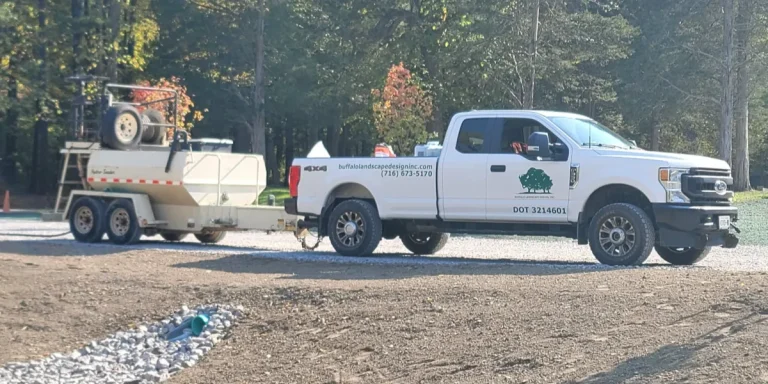
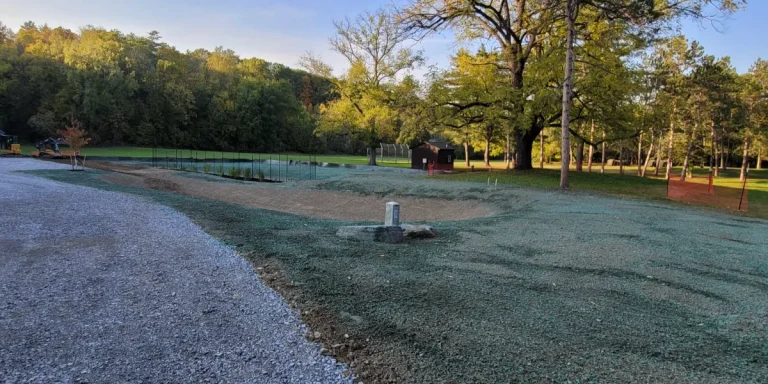
Hydroseeding uses a slurry mixture of seed, mulch, fertilizer, and water that is sprayed across the soil surface. This creates a protective layer that helps retain moisture and promotes germination.
A proper application ensures:
-
- Even distribution across the entire property
- Consistent thickness of the slurry
- Full coverage in slopes and hard-to-reach areas
This is especially important on larger lots or commercial builds where traditional seeding would be inconsistent and time-consuming.
Hydroseeding is often paired with commercial landscaping services and erosion control solutions to protect newly graded soil and prevent washouts before the lawn establishes.
You can learn more about the process on our hydroseeding service page.
Timing Is Critical for New Construction Projects
One of the biggest factors in hydroseeding success is timing.
In Western New York, the best windows are typically spring and early fall when temperatures and moisture levels support germination.
Builders often try to seed too late in the season just to finish a project, which leads to poor results.
The ideal conditions include:
-
- Mild temperatures without extreme heat or frost
- Consistent rainfall or the ability to irrigate
- Stable soil conditions after final grading
If irrigation is limited, temporary watering or sprinkler system adjustments may be needed to support early growth.
Planning it into the construction timeline properly avoids rework and delays.
The Most Common Hydroseeding Issues We See on New Builds
Across Cheektowaga, Depew, and West Seneca, we see the same problems on new construction properties.
Most of them come back to preparation or timing.
-
- Poor soil quality leading to weak or uneven growth
- Improper grading causing water pooling or runoff
- Inconsistent watering after application
- Seeding done too late in the season
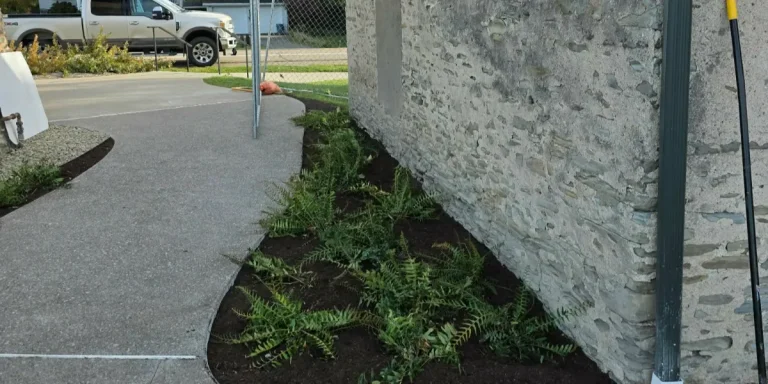
In many cases, these issues also affect surrounding landscaping elements like garden beds and newly installed plantings.
Addressing the site conditions first prevents most of these problems.
Why Hydroseeding Isn’t a Simple One-Step Process
There’s a common assumption that hydroseeding is just a quick spray-and-done solution.
In reality, it’s one part of a larger process.
-
- The soil needs to be prepared properly beforehand
- The application must be done evenly and under the right conditions
- The lawn requires consistent watering and monitoring afterward
Without follow-up care, even a well-applied hydroseed job can fail.
Ongoing support like lawn care services or property maintenance helps ensure the lawn continues to establish properly.
Getting it right the first time avoids having to redo sections later.
When Hydroseeding Is the Right Choice
Hydroseeding is ideal for many new construction projects, especially when speed and coverage matter.
It’s commonly used for:
-
- Large residential lots
- Commercial developments
- Properties with slopes or uneven terrain
Compared to sod, it’s more cost-effective for larger areas and allows the lawn to establish naturally in the existing soil conditions.
Our Landscape Pricing Guide helps builders and homeowners understand the cost differences between hydroseeding, sod, and new lawn installation options.
Choosing the right method depends on budget, timeline, and the size of the property.
When Other Solutions May Be Needed
In some cases, hydroseeding alone isn’t enough to solve the problem.
If the site has underlying issues, those need to be addressed first.
-
- Drainage problems that prevent proper growth
- Severely compacted or poor-quality soil
- Areas with heavy shade or difficult conditions
This is where additional services like drainage improvements, soil amendments, or strategic tree planting and plant selection come into play.
Trying to seed over unresolved issues usually leads to failure.
Planning Hydroseeding Into the Full Landscaping Scope
Hydroseeding shouldn’t be treated as an isolated step at the end of construction.
It works best when it’s part of a complete landscaping plan.
That includes:
-
- Coordinating grading, drainage, and lawn installation
- Planning garden beds and plantings alongside the lawn
- Integrating features like walkways, patios, or retaining walls
Using the landscape visualizer can help map out how the lawn and surrounding features will come together before installation begins.
Planning everything together avoids conflicts and leads to a more finished result.
Why choose Buffalo Landscaping
Hydroseeding on new construction properties isn’t just about applying seed, it’s about preparing the site properly and coordinating it with the rest of the project.
At Buffalo Landscaping, we work with builders and homeowners across Cheektowaga and surrounding areas to handle the full process from grading through final lawn establishment.
-
- Licensed and insured contractor experienced with new construction projects
- Knowledge of local soil conditions and climate in Western New York
- Full-service approach including grading, drainage, planting, and lawn installation
- Clear planning support using our Landscape Pricing Guide and visualizer
The goal is simple, install it correctly so the lawn comes in evenly and holds up long term.
Serving Buffalo and surrounding communities
Buffalo Landscaping provides hydroseeding and landscaping services throughout:
-
- Buffalo
- Amherst
- Clarence
- Orchard Park
- Williamsville
- Cheektowaga
- Lancaster
- Tonawanda
- West Seneca
We understand what new construction sites need to transition from bare soil to a finished property.
Get a Lawn That Actually Comes In Right
If you’re finishing a new construction project and need a lawn that establishes properly, the process matters just as much as the product.
At Buffalo Landscaping, we evaluate site conditions, handle preparation, and apply hydroseeding the right way so you don’t end up redoing it later.
Whether you’re a builder or homeowner, the first step is making sure the property is ready for it.
Request an estimate today and get a clear plan for your new construction lawn.